Transitioning from traditional, baseline formulations to precision trace mineral supplementation represents a primary lever for modern producers. It protects herd and flock health, optimizes advanced genetics, and strongly defends profit margins. Historically, standard inorganic salts served as the default choice in feed formulation. However, evaluating these legacy options against advanced organic or hydroxy complexes is now a critical operational decision. It is no longer just a minor nutritional tweak.
Modern production environments demand much higher physiological efficiency. We take a skeptical, evidence-based look at how you evaluate, select, and implement trace mineral formulations. You must base these vital procurement choices on actual bioavailability, feed matrix stability, and measurable ROI. Relying on outdated inclusion strategies often masks hidden production losses. Choosing the right formulation stops these unseen losses. It builds robust physiological resilience across your entire livestock operation.
Key Takeaways
Not all trace mineral feed additives deliver equal bioavailability; evaluating cost-in-use rather than cost-per-ton is critical for accurate procurement.
Organic and hydroxy minerals resist degradation from feed antagonists (like phytates) better than standard inorganic sulfates.
Implementation success hinges on homogeneous mixing capabilities and verifying stability within complex pelleted or extruded feeds.
Measurable ROI from premium animal nutrition supplements appears in long-term metrics: reproductive efficiency, hoof integrity, and localized immune response, rather than just daily weight gain.
Evaluating Trace Mineral Feed Additives: Beyond Baseline Nutrition
Standardizing on basic inorganic minerals often creates hidden operational bottlenecks. Producers frequently over-formulate these basic ingredients. They do this to compensate for notoriously poor absorption rates in the gut. This over-formulation directly leads to higher environmental excretion. High excretion rates subsequently trigger severe regulatory risks under modern environmental frameworks.
The industry is experiencing a massive shift toward precision nutrition. Modern animal genetics push physiological boundaries daily. These advanced genetics require higher-efficiency trace minerals to function properly. Critical elements like Zinc, Copper, Manganese, Selenium, Iron, and Cobalt play fundamental roles here. They help animals manage severe physiological stress and constant disease pressure. Precision sources deliver these elements without disrupting the delicate gut microbiome.
Ignoring this shift carries a steep cost of inaction. Facilities often suffer from hidden financial losses tied directly to sub-clinical trace mineral deficiencies. In dairy operations, you might see chronically elevated somatic cell counts. Poultry producers often face unexplained drops in hatchability. Swine operations routinely battle systemic oxidative stress during weaning. Upgrading your trace mineral feed additives directly mitigates these sub-clinical threats.
Inorganic vs. Organic Minerals in Animal Feed: Categorizing the Solutions
You must understand the distinct chemical categories before changing your formulations. Each class of mineral behaves differently inside the feed mill and inside the animal. Formulators generally divide these solutions into three primary categories.
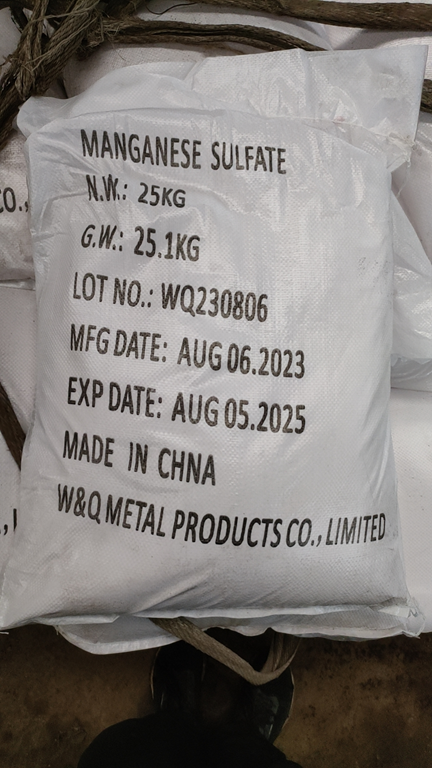
Inorganic minerals include traditional sulfates, oxides, and carbonates. Their main advantage is a very low upfront cost per ton. They remain widely available across global supply chains. However, they carry severe drawbacks. Inorganics exhibit extremely high reactivity in the feed matrix. They rely on weak ionic bonds. These weak bonds lead to rapid dissociation in the upper gastrointestinal tract. Once dissociated, they interact heavily with dietary antagonists, rendering them useless to the animal.
Organic trace minerals include chelates, amino acid complexes, and proteinates. Their primary benefit is superior bioavailability. They utilize alternative absorption pathways, such as peptide transporters, to bypass normal absorption bottlenecks. This efficiency leads to significantly lower excretion rates. The main drawback is a higher initial unit cost. Additionally, you will find variable quality across the market. Quality depends heavily on the specific ligand used and the supplier's manufacturing process.
Hydroxy trace minerals represent a newer, highly engineered category. They feature a unique crystalline structure. This structure offers exceptional stability in the feed bin. They provide targeted mineral release in the lower gastrointestinal tract. They serve as a highly cost-effective middle ground between inorganics and organics. However, their primary limitation is variety. Hydroxy technology is currently limited to specific minerals, primarily Copper, Zinc, and Manganese.
| Mineral Category | Primary Structure | Bioavailability | Cost Profile | Antagonist Resistance |
| Inorganic (Sulfates/Oxides) | Weak ionic bonds | Low to Moderate | Low initial unit cost | Very Poor |
| Organic (Chelates/Complexes) | Bound to carbon-based ligands | Very High | High initial unit cost | Excellent |
| Hydroxy Minerals | Crystalline matrix | High | Moderate initial unit cost | Strong |
![Trace Mineral Feed Additives Supplementation]()
Core Evaluation Criteria for Animal Nutrition Supplements
Selecting the right product requires looking past basic marketing claims. Evaluating animal nutrition supplements demands a rigorous, evidence-based approach. Gross concentration on a spec sheet actually matters very little. You must focus on the percentage of the mineral actually absorbed at the tissue level. A product with 50% concentration but only 10% absorption delivers less biological value than a 15% concentration product with 80% absorption.
Antagonist resistance forms another critical evaluation pillar. You need to know how well the additive resists binding with dietary antagonists. Common antagonists include phytate, fiber, calcium, and molybdenum. These elements naturally occur in the rumen or gut. If your trace mineral binds to them, the animal simply excretes it. Precision minerals maintain their structural integrity until they reach the optimal intestinal absorption sites.
Environmental and regulatory compliance is no longer optional. High-bioavailability solutions allow formulators to radically lower total dietary inclusion rates. Adding less total mineral reduces heavy metal loading in manure. This practice keeps your operation compliant with increasingly strict environmental limits.
Finally, you must audit your supplier's manufacturing standards. Heavy metal contamination represents a massive liability. You should look for strict protocols regarding:
Lead (Pb) testing limits and batch verification.
Cadmium (Cd) screening processes.
Arsenic (As) isolation and rejection protocols.
Third-party validation of the actual ligand bonding strength.
Common mistakes occur when procurement teams skip these QA/QC audits. Never assume standard feed-grade minerals automatically meet high purity thresholds. Always demand recent certificates of analysis.
Implementation Realities: Mixing, Stability, and Feed Matrix Risks
Buying a premium trace mineral solves only half the puzzle. Getting it into the animal reliably requires mastering several implementation realities. Homogeneous dispersion remains a massive operational challenge. Feed mills often add these micro-ingredients at mere grams per ton. Uniformly mixing such tiny amounts into bulk feed requires well-maintained equipment and extended mixing times. Poor mixing leads to dangerous nutritional dead zones in your feed lines.
Vitamin degradation presents another serious risk. Reactive inorganic Feed Additives can rapidly oxidize expensive fat-soluble vitamins. Vitamins A, D, and E are highly susceptible. Exposing these vitamins to reactive sulfates in a premix destroys their biological value. Complexed and hydroxy minerals are significantly less reactive. They protect your expensive vitamin and enzyme investments during storage.
You must also assess pelleting and extrusion survivability. Modern feed processing involves extreme thermal and mechanical stress. Temperatures routinely exceed 85 degrees Celsius. The trace mineral complexes must survive these high-temperature environments without breaking apart. If the bonds break during pelleting, you essentially revert to feeding an inorganic mineral.
Follow these implementation best practices to protect your nutritional investments:
Audit your mill's automated micro-dosing systems for flowability issues.
Evaluate storage conditions to mitigate clumping risks.
Test premix shelf-life specifically in humid environments.
Run regular coefficient of variation (CV) tests on your mixer lines.
Calculating ROI and Structuring Your Supplier Shortlist
Procurement teams must shift their evaluation framework entirely. Stop looking at raw feed cost per ton. You must define success metrics based on the "cost per unit of production." This metric accounts for the actual biological output. Track the cost per weaned pig. Monitor the cost per hundredweight of milk. Measure the cost per dozen settable eggs. Premium minerals lower these specific costs by improving overall animal efficiency.
You will observe different indicators over varying timelines. Short-term indicators usually manifest within a single production cycle. These include reduced early mortality rates and improved feed conversion ratios (FCR). However, the true value of premium minerals in animal feed appears in long-term metrics. You will see better reproductive longevity. You will notice significantly reduced lameness and fewer hoof lesions. Meat and egg quality will improve, evidenced by reduced drip loss and stronger eggshells.
Procurement professionals and nutritionists should take immediate action. First, conduct antagonist modeling on your current base diets. Identify exactly how much phytate or molybdenum you are battling. Second, run targeted replacement trials. Do not swap everything at once. Try replacing 30-50% of your inorganic baseline with organic or hydroxy alternatives. Finally, aggressively audit supplier trial data. Demand peer-reviewed studies specific to your species. Ensure their testing occurred in comparable production environments.
| Production Phase | Short-Term ROI Indicators | Long-Term ROI Indicators |
| Swine (Nursery/Grower) | Improved FCR, reduced weaning stress | Lower mortality, higher lean meat yield |
| Dairy Cattle | Lower somatic cell count | Reduced lameness, improved conception rates |
| Poultry (Layers/Broilers) | Stronger eggshells, lower early mortality | Extended laying cycles, reduced drip loss |
Conclusion
Upgrading your trace mineral formulations is not a luxury expense. It functions as a fundamental risk management strategy for modern livestock production. Outdated inorganic salts leave modern genetics vulnerable to stress, disease, and poor feed conversion.
True procurement value is found at the intersection of proven biological efficacy, feed matrix stability, and verifiable ROI. Evaluating minerals purely on initial unit cost creates blind spots. Take action by modeling dietary antagonists in your current formulations. Run targeted partial-replacement trials to measure actual production gains. Demand rigorous QA/QC data from your suppliers. By adopting a precision mindset, you protect animal health while simultaneously driving long-term profitability.
FAQ
Q: Can I completely replace inorganic minerals with organic trace minerals?
A: Yes, total replacement is biologically possible and highly effective. However, many producers use a partial replacement strategy (replacing 30-50%) to manage cost ceilings. Partial replacement still delivers significant physiological benefits while keeping the overall feed formula budget balanced.
Q: How do trace mineral requirements differ between ruminants and monogastrics?
A: Ruminants require minerals that can survive the complex rumen microflora. Basic inorganics often bind to antagonists in the rumen, becoming unavailable. Monogastrics (like swine and poultry) absorb minerals directly in the gut, making targeted intestinal release and phytate resistance the primary concerns.
Q: What is the "chelation strength" and why does it matter?
A: Chelation strength refers to the stability of the bond between the mineral and its organic ligand. It matters because the bond must be strong enough to survive the acidic stomach and feed matrix, but weak enough to release the mineral at the intestinal absorption site.
Q: How do trace minerals interact with other feed additives like phytase?
A: Phytase enzymes break down dietary phytate to release bound phosphorus. Standard inorganic minerals can bind to this newly freed phytate, creating insoluble complexes. Using highly stable organic or hydroxy minerals prevents this antagonistic binding, allowing phytase to work efficiently.