In chemical processing and surface finishing, assuming all nickel acetate is created equal is a costly operational risk. Trace contaminants can rapidly compromise entire production runs, leaving facility managers scrambling to identify the root cause of unexpected surface defects. Transitioning from small lab-scale formulations to high-volume industrial application requires a fundamental shift in operational focus. You can no longer rely solely on theoretical chemical properties or basic technical data sheets. Instead, you must demand strict batch-to-batch consistency and proactive impurity management from your supply chain. Minor deviations in raw material quality often trigger catastrophic process failures downstream, ruining valuable parts. This guide breaks down how to objectively evaluate nickel acetate specifications. We will explore actionable strategies to mitigate contamination risks effectively. You will also learn how to rigorously qualify suppliers for your most critical industrial applications. By mastering these evaluation protocols, you safeguard process stability and ensure predictably high-quality yields.
Key Takeaways
Ni23% is a baseline, not a guarantee: Standard nickel content indicates fundamental compliance, but the control of trace heavy metals and insolubles dictates actual performance.
Application dictates specification: Electroplating, anodizing seals, and catalyst production each have distinct tolerance thresholds for specific impurities like iron, chlorides, and sulfates.
Supplier vetting requires technical audits: Relying solely on a general Certificate of Analysis (COA) is insufficient; rigorous evaluation requires verifying raw material sourcing and batch-consistency data.
Hidden costs of low purity: Cheaper, lower-grade material often results in increased filtration costs, pH instability, and higher product rejection rates.
The Business Cost of Assuming Purity in Industrial Grade Nickel Acetate
Many buyers focus entirely on the initial purchase price of their raw materials. However, utilizing substandard industrial grade nickel acetate creates severe operational and financial burdens. We observe this routinely in high-throughput manufacturing facilities. Trace contaminants do not simply disappear during reactions. They accumulate aggressively in your process baths and catalytic systems.
Yield and rework rates suffer immediately when chemical purity drops. Trace metals cause unpredictable internal stress in electroplated deposits. This stress often leads to micro-cracking or peeling. In aluminum anodizing, poor chemical quality leads to smutting. You might also notice severely reduced lifespans in custom catalyst manufacturing. Every rejected batch multiplies your labor, utility, and material expenses.
Filtration and maintenance overhead also skyrocket. High levels of undissolved solids force your pumps and filter presses to work significantly harder. You must perform frequent, time-consuming bath purifications to keep operations running smoothly. Operators must pause production to carbon-treat or dummy-plate contaminated solutions. This recurring downtime severely limits your overall production capacity.
Furthermore, unintended heavy metal contaminants complicate your environmental compliance and waste treatment efforts. Regulatory agencies strictly monitor facility discharge limits. Removing unexpected metals from your effluent streams requires expensive chemical precipitants and sludge disposal fees. Ultimately, procuring cheap chemicals costs significantly more to manage, filter, and dispose of.
Best Practices for Cost Avoidance:
Track your filter replacement frequency to identify highly contaminated chemical batches.
Calculate the hourly cost of line downtime versus the premium paid for better raw materials.
Audit your waste treatment chemical usage after introducing a new batch of nickel salts.
![Nickel Acetate Packaging and Evaluation]()
Decoding Specifications: Beyond the "Nickel Acetate Ni23%" Standard
Buyers routinely see nickel acetate Ni23% highlighted on a specification sheet. They often assume this single metric guarantees overall quality. In reality, this percentage only indicates the theoretical nickel content of the tetrahydrate form. It represents basic, fundamental compliance. It serves merely as the starting point for a thorough technical evaluation.
Moisture content and hydration states vary wildly between different chemical manufacturers. These variations directly impact your accurate dosing procedures. When crystal water levels fluctuate unexpectedly, batch calculations by weight become highly unreliable. You might inadvertently under-dose or over-dose your reactive nickel species. This inconsistency throws complex plating formulas completely out of balance.
Solubility profiles clearly separate premium products from mediocre ones. Seasoned operators know the critical difference between a powder that "dissolves eventually" and one that "dissolves cleanly and rapidly." Time-sensitive industrial mixing requires immediate, residue-free dissolution. Sluggish solubility delays production schedules and wastes electrical energy during prolonged tank heating.
Finally, the baseline pH of the raw chemical solution matters immensely. It directly affects the buffering capacity of your plating and sealing baths. A highly acidic batch forces operators to waste valuable time adding neutralizers like dilute ammonia. Consistent pH stability ensures smoother, more predictable daily operations without constant manual interventions.
Table 1: Generic vs. Premium Nickel Acetate Specifications
| Parameter | Generic Specification | Premium Specification | Operational Impact |
| Nickel (Ni) Content | ≥ 22.5% | 23.0% - 23.5% | Ensures accurate dosing and consistent chemical reactions. |
| Water Insolubles | < 0.05% (500 ppm) | < 0.01% (100 ppm) | Reduces filter clogging and prevents surface roughness. |
| Iron (Fe) Impurity | < 50 ppm | < 10 ppm | Prevents yellowing in anodizing seals and plating defects. |
| pH (5% Solution) | Wide range (4.0 - 6.0) | Tightly buffered (5.0 - 5.5) | Minimizes time spent adjusting bath chemistry during makeup. |
Tracing and Mitigating Critical Nickel Acetate Impurities
You must conduct a rigorous risk assessment to protect your manufacturing process. We categorize the most disruptive nickel acetate impurities by their specific chemical mechanisms of failure. Understanding these underlying mechanisms helps you troubleshoot effectively when defects suddenly appear.
Heavy Metals (Fe, Cu, Pb, Zn): These elements present massive co-deposition risks in electroplating. Even trace amounts cause severe discoloration and brittle deposits. In anodizing seals, iron contamination leads to catastrophic corrosion resistance failures and unwanted yellowing on clear finishes.
Anionic Contaminants (Chlorides, Sulfates): Excess anions trigger localized equipment corrosion, specifically pitting in stainless steel tanks. They cause unwanted, erratic shifts in bath conductivity. Furthermore, they aggressively interfere in sensitive catalytic reactions, acting as temporary poisons.
Insoluble Matter: Particulates incorporate directly into surface finishes as they form. This direct incorporation leads to unacceptable surface roughness. You will face mandatory mechanical rework, such as polishing, to salvage the rejected parts.
To mitigate these risks properly, establish maximum acceptable parts-per-million (ppm) thresholds. Base these thresholds on stringent industry standards rather than arbitrary guesses. A proactive evaluation tactic involves testing raw materials before they ever reach your main production tanks.
Common Mistakes to Avoid:
Assuming city water quality will not compound the impurities found in your nickel salts.
Failing to calibrate pH meters before testing the acidity of a newly dissolved batch.
Ignoring a cloudy appearance in the makeup tank, hoping the main filter will catch it.
Matching High Purity Nickel Acetate to Specific Application Demands
Proper solution categorization prevents costly procurement mistakes. You must align purity requirements perfectly with your precise end-use case. Over-specifying wastes your procurement budget unnecessarily. Under-specifying practically guarantees defective end products and frustrated clients.
Aluminum Anodizing (Cold/Mid-Temp Sealing)
Anodizers focus heavily on preventing smut formation on aluminum extrusions. They must ensure optimal dye retention for vibrant colored finishes. This specialized application requires strict control over iron levels and insoluble matter. Minor iron contamination easily ruins a bright cosmetic finish, causing a muddy appearance. Hydration consistency is also vital to maintain the delicate chemical balance of fluoride-based cold seals.
Electroplating and Surface Finishing
Platers focus primarily on deposit brightness, ductility, and internal stress reduction. Their electrolytic baths demand exceptionally low metallic impurities. Zinc and copper, even at extremely low ppm levels, ruin the mechanical properties of a nickel deposit. These trace metals deposit preferentially at low current density areas, causing dark, dull patches on complex geometries.
Catalyst Manufacturing and Specialty Chemicals
Catalyst producers focus on strict chemical purity and predictable stoichiometry. This highly sensitive field requires true high purity nickel acetate. You must verify the absolute absence of catalyst poisons, such as volatile sulfur compounds or trace lead. Even microscopic amounts of these poisons permanently deactivate catalytic active sites, ruining the entire batch.
How to Audit and Shortlist a Nickel Chemical Supplier
Developing a sound shortlisting logic changes how you procure industrial chemicals entirely. A framework for evaluating a nickel acetate supplier must extend far beyond a simple price-per-kilo comparison. You need a reliable technical partner, not just a transactional vendor.
First, learn to cross-examine a Certificate of Analysis (COA) critically. Many buyers accept generalized or "typical" specification ranges without question. You must demand actual, batch-specific testing data. The discrepancy between a standard COA and reality remains a major pain point in chemical procurement. Ensure the lab data aligns with your facility's internal tolerance limits.
Next, assess overall supply chain traceability. Ask exactly where the nickel chemical supplier sources their raw nickel feedstocks. Upstream sourcing stability directly impacts your downstream chemical consistency. If their raw material inputs change constantly, your product quality will inevitably fluctuate.
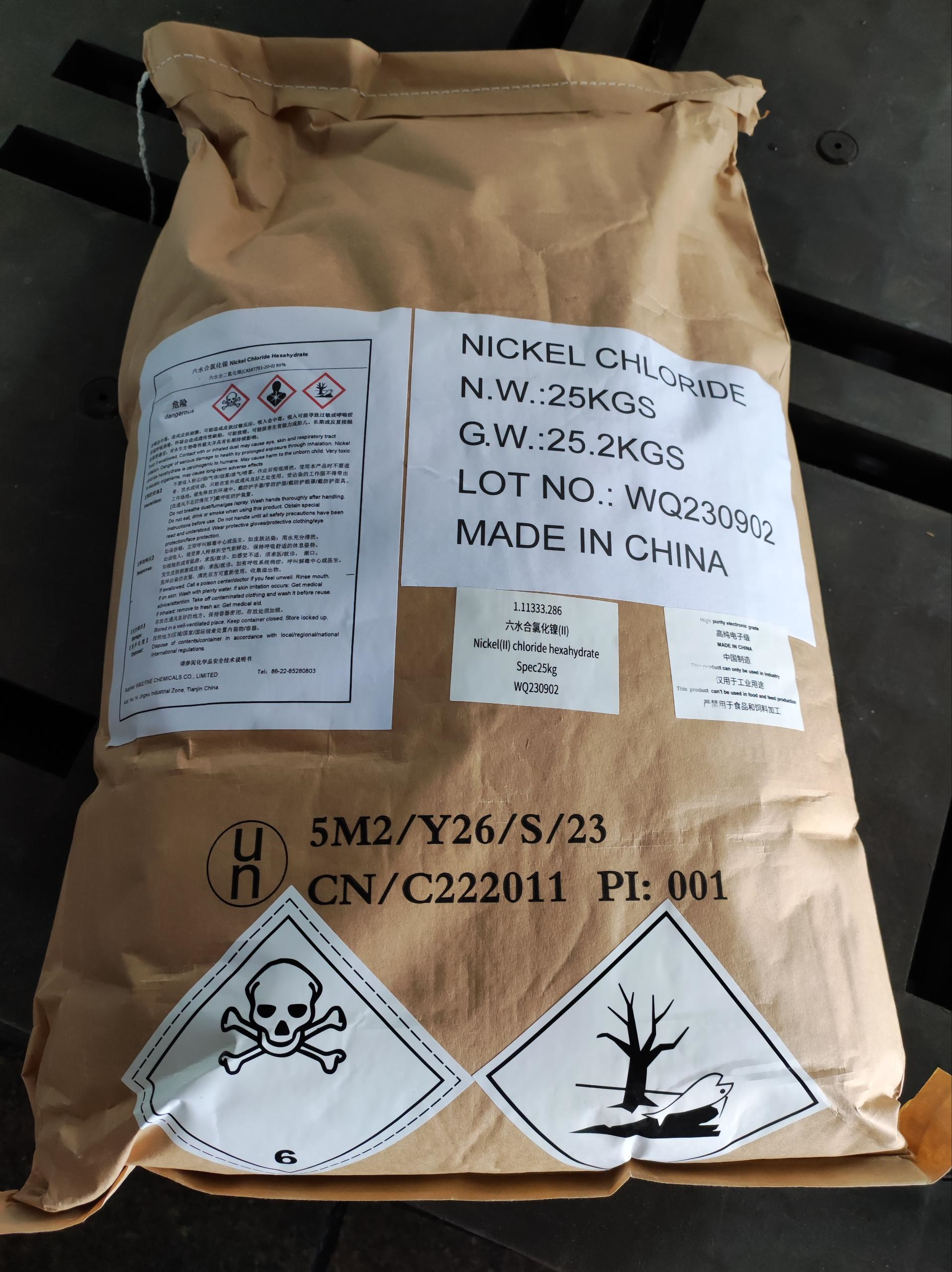
Do not ignore physical packaging and handling standards. Evaluate their moisture-barrier packaging carefully. Double-lined polyethylene (PE) bags prevent caking and chemical degradation during long transit times. Poor packaging turns high-grade, reactive chemicals into unusable, rock-solid blocks.
Your next-step action should always involve a mandatory pilot trial. Request a pilot sample alongside its specific, matching COA. Conduct a bench-scale stress test to evaluate actual solubility speed and pH drift. Do this rigorous testing before ever committing to a large commercial volume.
Conclusion
The true value of nickel acetate is measured by its overall impact on your total production yield, not just its raw material cost. Achieving consistent chemical excellence requires proactive vendor management, strict impurity limits, and rigorous incoming testing protocols. By elevating your standards, you protect your facility from unpredictable downtime and costly rework.
Redefine procurement metrics: Shift your purchasing conversations from simply asking "Does it meet Ni23%?" to demanding, "What is your strict control limit for trace insolubles and iron?"
Prioritize verifiable data: Always request detailed technical data sheets (TDS) and batch-specific Certificates of Analysis before approving a new vendor for critical applications.
Mandate bench-scale trials: Arrange for a lab-scale sample to benchmark solubility behavior and pH stability against your current chemical formulation.
Audit packaging integrity: Ensure your vendors use robust, moisture-resistant packaging to preserve chemical reactivity during long-term warehouse storage.
FAQ
Q: What causes nickel acetate solutions to become cloudy, and how can it be prevented?
A: Cloudiness usually points to high insoluble impurities or an incorrect pH during dissolution. You can prevent this by specifying high-purity grades with strictly controlled insoluble limits. Additionally, ensure proper acid adjustment during bath makeup. Making precise acetic acid additions helps maintain clarity and optimizes the solution for immediate industrial use.
Q: Is there a functional difference between liquid and dry crystalline nickel acetate?
A: Yes. The choice involves clear logistical trade-offs. Dry crystalline forms lower your freight costs and offer longer shelf stability. Liquid solutions eliminate dust handling safety concerns and integrate much easier into automated liquid-feed systems. Your choice depends entirely on your facility's specific handling capabilities and daily consumption rates.
Q: How long can industrial grade nickel acetate be stored before it degrades?
A: Because it is highly hygroscopic, storage life depends entirely on packaging quality. Inside hermetically sealed, double-lined bags, it remains stable for one to two years. However, exposure to ambient humidity causes rapid moisture absorption. This leads to severe caking, which dramatically reduces dissolution rates and complicates accurate batch weighing.
Q: Why does the pH of my anodizing sealing bath drift when adding fresh nickel acetate?
A: Bath drift occurs when your fresh chemical contains excess free acetic acid or hidden alkaline impurities. Poorly manufactured batches lack chemical balance, which disrupts your bath's buffering capacity. Sourcing highly pure, pH-stabilized nickel acetate ensures your sealing bath remains within its optimal operating window without requiring constant neutralizing additions.