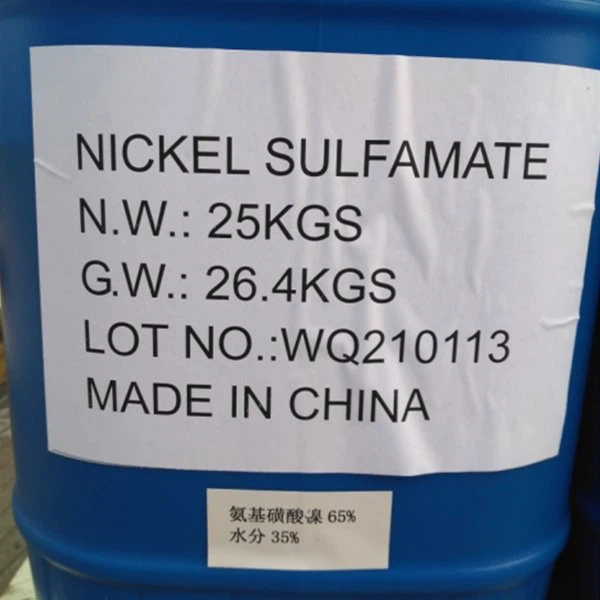
Achieving high-strength, low-stress electroforms demands extreme precision. It relies heavily on how you introduce chemicals into the plating bath. Maintaining perfect equilibrium is not merely about the active ingredients. It is about your daily operational methodology. Plating facility managers constantly face a critical balancing act. You must weigh upfront chemical expenses against freight logistics and operational labor. Choosing the wrong physical form of your primary nickel source can easily disrupt workflows. It often inflates your daily overhead significantly while introducing unseen variables.
We will strip away the typical marketing noise to compare dry crystals versus pre-mixed solutions objectively. You will learn how to evaluate these distinct chemical forms for your specific operational scale. We highlight the unseen logistical hurdles associated with each option. This comprehensive guide helps procurement and engineering teams make confident, data-backed decisions. You can streamline operations and optimize your production lines effectively.
Key Takeaways
Total Cost vs. Freight: Crystals reduce shipping costs and extend shelf life but require strict internal quality control for dissolution. Solutions carry higher freight costs but minimize labor and mixing errors.
Process Stability: Pre-mixed solutions (like nickel sulfamate Ni18%) offer immediate bath integration and precise dosing for automated systems.
Infrastructure Dependency: Dissolving crystals requires high-grade deionized (DI) water and dedicated mixing tanks; facilities lacking this infrastructure risk introducing contaminants.
Sourcing Priority: Regardless of form, partnering with a primary nickel sulfamate manufacturer that guarantees plating-grade purity is non-negotiable for aerospace, electroforming, and semiconductor applications.
The Operational Impact of Chemical Form in Electroplating
You cannot produce a stable sulfamate bath by accident. It requires exact environmental controls and highly purified inputs. The foundational success criteria for this process rely on three main pillars. First, you must maintain a precise nickel metal concentration. Second, the bath must remain entirely free of foreign metallic impurities. Third, operators must hold the pH levels in a strict range, usually between 3.5 and 4.5.
Transitioning between solid and liquid chemical forms impacts your entire operation. It dictates warehouse storage compliance protocols. It also transforms the daily routines of your bath operators. Liquid chemistry simplifies immediate additions. Solid chemistry demands a rigid, multi-step preparation workflow. Overlooking these differences often leads to severe plating defects.
Establishing baseline requirements is mandatory for high-performance applications. Using certified plating grade nickel sulfamate prevents common deposit issues. It stops pitting across the surface. It eliminates unwanted nodulation during long electroforming runs. Furthermore, it ensures you achieve the low internal stress required for aerospace and semiconductor components. The chemical form you choose directly influences how easily you maintain these baseline standards daily.
Nickel Sulfamate Crystal: Logistics, Storage, and Labor
Dry chemistry offers a compelling logistical advantage for many facilities. Purchasing solid materials means shipping 100% active ingredients. You completely eliminate the freight costs associated with transporting water. This freight efficiency makes solid forms highly attractive for international sourcing. It also benefits remote facilities operating far from their chemical suppliers.
Storage density is another major benefit. Crystals require a significantly smaller physical footprint per pound of active nickel. They offer exceptional stability in storage environments. Properly sealed containers can sit in unheated warehouses for extended periods without degrading. This extended shelf life allows procurement teams to buy in bulk during favorable market conditions.
However, implementing solid chemistry introduces substantial facility risks. We must examine the skeptic's view to understand these challenges fully. A facility must possess specific infrastructure to process nickel sulfamate crystal safely and effectively.
Preparation Infrastructure: You must install heated mixing tanks and generate high-purity DI water. Using standard tap water introduces calcium and iron contaminants immediately.
Defect Risks: Operators risk introducing undissolved particulates into the main bath. These stray solids cause severe roughness in the final plating layer.
Operator Burden: Dissolving solids significantly increases operator handling time. It also elevates potential chemical exposure risks during the transfer and mixing phases.
Handling protocols must be stringent. Operators should always dummy-plate the newly mixed batch before introducing it to active production tanks. This step catches any residual impurities.
Nickel Sulfamate Solution: Consistency and Process Automation
Pre-mixed liquids provide an immediate quality control advantage. Commercially blended solutions are heavily filtered before packaging. The manufacturer purifies the blend using advanced industrial techniques. This process virtually eliminates the risk of introducing local water contaminants into your sensitive baths. You rely on the supplier's highly controlled laboratory environment rather than your own plumbing.
Liquid forms represent the gold standard for continuous replenishment systems. Precision dosing relies on consistent fluid dynamics. Automated pumps can inject exact volumes of liquid directly into the bath based on amp-hour usage. You cannot achieve this level of seamless, automated maintenance using dry solids.
Facilities should evaluate the distinct variations available in the liquid market. Standard concentrations work well for general plating. However, high-yield options like nickel sulfamate Ni18% deliver superior benefits for high-speed environments. A higher active metal concentration minimizes the amount of water you add back into the bath. This tightens your control over overall bath volume and specific gravity.
Despite the operational ease, solutions present their own set of implementation risks. Shipping costs are naturally higher due to the sheer volume of water. Additionally, winter transit requires careful logistics. The nickel sulfamate solution can crystallize if stored at exceptionally low temperatures. You must ensure climate-controlled warehousing to prevent the product from dropping out of suspension.
![Nickel Sulfamate Process Optimization]()
Head-to-Head Evaluation: Resource and Workflow Metrics
Choosing a chemical form requires a granular look at your facility's daily workflow. You must align the material's physical properties with your internal capabilities. We break down the core features and their operational outcomes below.
Chemical Form Evaluation Matrix
| Evaluation Metric | Dry Crystal | Pre-Mixed Solution |
| Material Cost | Wins on upfront price per pound of active nickel. Zero water weight shipped. | Higher initial invoice due to water volume and specialized packaging. |
| Labor & Overhead | Requires intensive prep time, heating, mixing, and secondary filtration. | Wins heavily on zero-prep time. Grants immediate bath readiness. |
| Quality Assurance | Relies entirely on the facility's water purity and operator mixing skills. | Wins on guaranteed manufacturer-level homogeneity and strict filtration. |
We must view these metrics through a scalability lens. High-volume plating shops view resource allocation differently than boutique electroforming labs. A large automated facility burns through chemistry rapidly. They heavily prioritize automated dosing to eliminate manual labor bottlenecks. Conversely, a small R&D lab might prioritize the long shelf life of dry materials because their replenishment cycles are infrequent.
Transparency regarding hidden costs is vital. Purchasing a "cheaper" dry product often deceives facility managers. If a shop lacks stringent dissolution protocols, the material cost savings evaporate quickly. You end up spending far more capital on labor hours, bath troubleshooting, and stripping defective parts. The choice fundamentally dictates how you spend your engineering resources. Every batch of nickel sulfamate you introduce carries these workflow implications.
Shortlisting Logic: Which Form Should You Choose?
Making the final decision requires a clear audit of your existing infrastructure. We recommend using a straightforward decision tree. Match your facility profile to the appropriate chemical form.
Evaluate International Logistics: Choose the solid form if you are shipping materials across oceans. The freight savings on dry materials easily justify the extra internal labor required for mixing.
Assess Internal Infrastructure: Choose the solid form only if you already possess high-capacity, heated mixing tanks. You must also have a premium DI water generation system on-site. Do not attempt to dissolve solids using temporary setups or poor water quality.
Analyze Replenishment Frequency: Choose the solid form if your bath replenishment cycles are highly infrequent. Dry materials prioritize long shelf life without the risk of winter freezing.
Prioritize Automation: Choose the liquid form if you utilize automated dosing equipment. Liquids enable seamless integration with amp-hour tracking systems.
Review EHS Mandates: Choose the liquid form if minimizing operator handling is a strict Environmental, Health, and Safety mandate. Liquids significantly reduce chemical dust exposure.
Ultimately, choose the liquid form if your primary goal is a zero-defect, plug-and-play process. Utilizing a pre-purified nickel sulfamate for electroplating removes human error from the equation almost entirely.
Evaluating a Nickel Sulfamate Manufacturer
Securing the right physical form means little if the underlying chemistry is impure. You must vet your suppliers rigorously. The Certificate of Analysis (CoA) serves as your primary defense against contamination. You should look for extremely low maximum limits on metallic impurities like iron, copper, and zinc. The CoA must reflect actual batch testing, not generic typical values.
Traceability and compliance separate premium vendors from commodity brokers. Ensure the supplier conforms strictly to ISO quality standards. If you operate in specialized sectors, verify their compliance with industry-specific regulations, such as aerospace MIL-SPEC requirements. Your vendor should understand how trace organics impact deposit stress.
Take proactive next steps before committing to bulk orders. Request small engineering samples to run Hull Cell tests in your own lab. Compare their Technical Data Sheets (TDS) against your current baseline. Finally, audit their supply-chain resilience. Buying directly from a vetted nickel sulfamate manufacturer ensures you receive consistent technical support. It protects your operation from sudden market shortages and fluctuating quality.
Conclusion
The choice between crystal and solution goes far beyond basic chemistry. It is fundamentally a logistical and infrastructural decision. We have seen how each physical form directly impacts your warehouse storage, freight bills, and daily operator routines. Solid materials offer undeniable freight efficiency and storage longevity. Pre-mixed liquids offer unmatched process consistency and seamless automation integration.
We strongly recommend auditing your facility before looking at the chemical invoice. Assess your water purity generation. Inspect your mixing equipment capabilities. Calculate your true hourly labor rates for chemical preparation. If you lack pristine water and dedicated mixing tanks, dry solids will cause expensive production defects.
Take action today to optimize your plating line. Prompt your engineering team to contact technical sales for a custom workflow breakdown. Request a comprehensive batch analysis to see how a new chemical form can improve your specific electroforming or plating application.
FAQ
Q: Can I mix nickel sulfamate crystals directly into an active plating bath?
A: No. You must never add dry crystals directly to an active production tank. You require a separate, heated mixing tank for dissolution. Undissolved solids will easily adhere to your parts. This causes severe roughness, pitting, and immediate part rejection. Always mix, filter, and dummy-plate the solution before transferring it.
Q: What is the shelf life difference between crystal and solution?
A: Properly stored dry crystals possess an almost indefinite shelf life. They remain highly stable in varied warehouse environments. Liquid solutions are highly temperature-sensitive. They generally carry a one- to two-year shelf life. Liquids may crystallize and drop out of suspension if subjected to freezing temperatures during transit or storage.
Q: Why is nickel sulfamate Ni18% preferred over lower concentrations?
A: Ni18% provides a substantially higher active nickel content per gallon. This minimizes the amount of excess water you introduce to the bath during replenishment. It helps operators maintain much tighter control over total bath volume and specific gravity. It is especially beneficial in high-speed plating where evaporation rates vary.
Q: How do I convert my process from solution to crystals?
A: Start with a strict validation process. First, secure a reliable high-purity DI water source. Next, install dedicated, heated mixing tanks and secondary filtration units. Mix a trial batch and verify the impurity levels. Finally, run comprehensive Hull Cell testing to ensure deposit stress and brightness match your standards before full rollout.