While nickel is a ubiquitous transition metal, selecting the correct nickel grade or compound requires balancing exceptional performance characteristics against strict regulatory and environmental realities. Procurement managers, chemical engineers, and material scientists frequently evaluate this metal for industrial, manufacturing, or catalytic applications. The decision goes far beyond simple availability. You must carefully weigh upfront purity requirements against complex environmental compliance rules. Misunderstanding these nuances often results in premature material degradation, compliance fines, or unsafe working conditions.
This guide bypasses basic trivia to focus on the operational realities of specifying nickel. You will not find simple historical facts here. Instead, we explore how to evaluate baseline chemical properties and navigate complex industrial applications. We also break down strict compliance requirements and critical procurement criteria. By the end of this article, you will know exactly how to assess different nickel options. You will learn to source materials safely, ensuring they meet your specific engineering and commercial demands.
Key Takeaways
Core Utility: Nickel’s primary value lies in its corrosion resistance, high-temperature stability, and catalytic efficiency, making it foundational for alloys and the chemical industry.
Application Scope: Beyond stainless steel, specific nickel chemical compounds are critical for battery precursors, electroplating, and industrial catalysis.
Risk Profile: Implementation requires strict adherence to environmental and occupational health standards due to the proven toxicity of certain nickel compounds.
Sourcing Logic: Selecting a nickel supplier demands evaluating purity standards, supply chain stability, and regulatory documentation.
Understanding the Nickel Chemical Profile for Material Selection
Misunderstanding baseline chemical constraints leads to premature material degradation and process failures. Engineers often specify a material based on broad assumptions. However, failing to align the exact chemical profile of a nickel grade to your operational environment guarantees failure. You must evaluate specific performance metrics before making any procurement decisions.
Crucial Performance Metrics
Oxidation and Corrosion Resistance: Nickel exhibits remarkable durability in harsh environments. It forms a dense, passivating oxide layer upon exposure to air. This microscopic layer acts as a shield. It prevents further oxidation and protects the underlying base metal from corrosive decay.
Thermal Stability: The metal boasts a high melting point of 1455°C (2651°F). It retains structural integrity and mechanical strength at extreme temperatures. High thermal conductivity also ensures even heat distribution, preventing localized thermal stress.
Reactivity and Oxidation States: Nickel can exist in several oxidation states. However, the +2 oxidation state remains the most common. It is the highly relevant form for industrial nickel chemical reactions. This specific state drives the formulation of critical industrial salts and catalysts.
Recognizing the Limitations
Despite its durability, pure nickel is not invincible. You must acknowledge scenarios where it underperforms without proper alloying. For instance, pure nickel struggles in specific highly acidic environments. Hydrochloric acid and sulfuric acid at certain concentrations will rapidly degrade the unalloyed metal. In these scenarios, you must specify advanced alloys rather than pure grades to prevent catastrophic equipment failure.
High-Value Uses in the Chemical Industry and Manufacturing
Aligning specific nickel forms with commercial outcomes drives operational success. You can source nickel as a pure metal, an intricate alloy, or a highly refined compound. Choosing the right form dictates your yield efficiency and equipment lifespan.
1. Catalysis in Petrochemicals and Processing
Catalysis remains one of the most vital applications for this element. Facilities heavily rely on Raney nickel and similar catalysts for hydrogenation processes. These materials accelerate complex petrochemical reactions. The primary commercial outcome is a massive increase in yield efficiency. A well-optimized catalyst minimizes waste and accelerates production timelines within the broader chemical industry.
2. Alloying and Metallurgy
Modern infrastructure depends entirely on advanced metallurgy. Nickel serves as the backbone for austenitic stainless steels and high-performance superalloys. Inconel and Hastelloy represent prime examples. Aerospace engineers and chemical processing plants use these alloys to survive extreme heat and corrosive gases. The outcome here is simple: extended equipment lifecycle. You replace parts less frequently when using optimized alloys.
3. Energy Storage & Electrochemistry
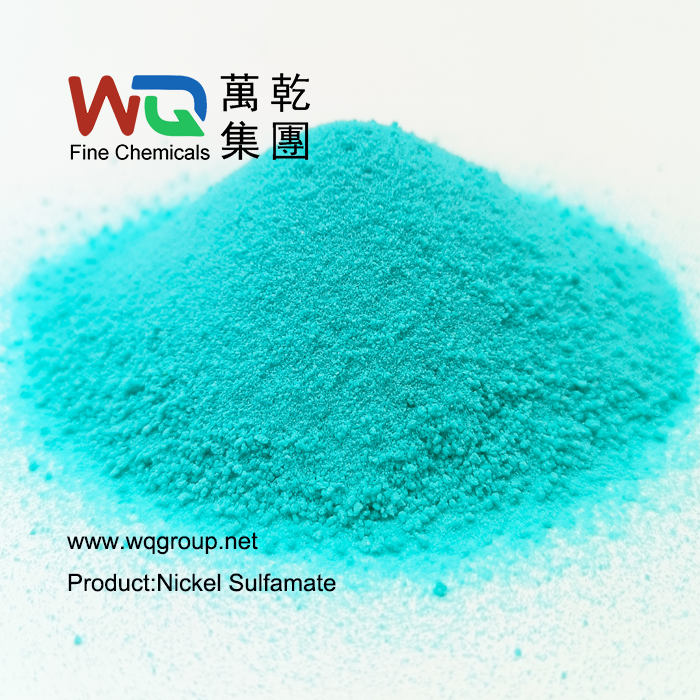
The global shift toward renewable energy relies heavily on electrochemical innovation. Manufacturers apply highly refined nickel sulfate directly to lithium-ion battery cathodes. These specific chemical precursors determine the overall capacity of the battery. Using optimal grades results in a higher energy density for commercial energy storage systems. This density extends electric vehicle ranges and improves grid storage reliability.
![Nickel sulfamate used in chemical processes]()
Evaluating Nickel Against Alternative Materials
Engineers constantly face a complex decision matrix. You must frequently choose between nickel, copper, cobalt, or specialized synthetic polymers. Each option carries distinct commercial and operational impacts.
Cost vs. Lifecycle ROI
Upfront raw material costs often deter buyers from selecting premium alloys. Nickel-based materials generally cost more initially than standard steel or certain polymers. However, evaluating purely on initial price ignores long-term savings. High-performance alloys resist corrosion and mechanical fatigue. They drastically reduce ongoing maintenance needs. They prevent unexpected facility downtime. Over a ten-year operational span, the initial premium easily pays for itself through uninterrupted production.
Performance Trade-offs
You must balance exact purity needs against budget constraints. Not every application requires high-purity electrolytic grades. Low-grade commercial options work perfectly for basic structural alloying. Conversely, sensitive battery manufacturing demands ultra-pure compounds to prevent catastrophic short circuits.
When dealing with high-stress, high-heat applications, engineers often compare superalloys against titanium. Titanium offers an incredible strength-to-weight ratio, making it ideal for certain aerospace parts. However, nickel-based superalloys generally maintain higher mechanical strength at elevated temperatures exceeding 600°C. They also handle prolonged thermal cycling better than many titanium grades.
Comparative Material Analysis Table
| Material | Primary Strength | Notable Weakness | Best Industrial Fit |
| High-Purity Nickel | Excellent corrosion resistance | High raw material cost | Chemical catalysts, battery precursors |
| Titanium | Superior strength-to-weight ratio | Difficult to machine | Aerospace frames, medical implants |
| Copper Alloys | Unmatched electrical conductivity | Poor high-temperature strength | Electrical grids, heat exchangers |
| Standard Stainless Steel | Cost-effective baseline durability | Vulnerable to extreme pitting | Food processing, basic architecture |
Assessing Supply Scalability
A superior material is useless if you cannot source it reliably. You must assess whether your chosen compound can be supplied consistently at commercial volumes. Global markets frequently experience cost volatility. Relying on an obscure, highly specialized grade might expose your supply chain to prohibitive price spikes during geopolitical disruptions.
Managing Compliance, Toxicity, and Handling Risks
Protecting the workforce and avoiding regulatory fines are non-negotiable priorities. Handling these materials requires absolute strictness. Ignoring safety protocols invites severe legal and human consequences.
Occupational Health Constraints
Facility managers must address the severe realities of workplace exposure. Direct, prolonged skin contact often triggers sensitization, leading to severe allergic dermatitis. Inhalation risks represent an even greater threat. Specific fine dusts and insoluble compounds carry proven carcinogenicity risks. Workers inhaling these particulates over long periods face serious respiratory diseases. You must never treat soluble powders with the same leniency as solid metallic bars.
Environmental and Regulatory Compliance
Global regulatory bodies tightly monitor emissions and waste. You must navigate mandates from the EPA, OSHA, and strict international frameworks like REACH in Europe. These directives heavily regulate wastewater limits and airborne emission thresholds. Discharging untreated soluble salts into municipal water systems results in massive fines and immediate facility shutdowns.
Implementation Realities and Best Practices
Integrating these processes into your facility demands heavy engineering controls. You cannot simply rely on basic dust masks. Facilities must invest in localized exhaust ventilation systems. Isolation chambers may be necessary for handling fine powders. Appropriate Personal Protective Equipment (PPE) is mandatory.
Common Mistakes to Avoid:
Treating solid metals and soluble salts with the same risk protocols.
Relying on standard HVAC systems instead of localized source-capture ventilation.
Failing to conduct routine air-quality monitoring in processing zones.
Disposing of spent catalysts without certified hazardous waste contractors.
Procurement Strategy and Vendor Shortlisting
De-risking your supply chain requires rigorous vendor verification. Sourcing industrial materials is not a simple transactional purchase. You are forming a partnership that dictates your own product quality.
Navigating Supply Chain Volatility
Global mining and refining operations face constant geopolitical risks. A significant portion of the world's supply originates from a few concentrated regions. Changes in export laws or regional instability cause immediate price fluctuations. Savvy procurement teams hedge against these spikes. They secure long-term flexible contracts and diversify their supplier base across different geographic regions.
Vendor Evaluation Criteria
When shortlisting suppliers, strictly evaluate their operational transparency and quality control frameworks.
Comprehensive Documentation: Never purchase materials without reviewing the paperwork. Demand precise Certificates of Analysis (CoA) for every single batch. You must also secure updated Safety Data Sheets (SDS) to ensure workplace compliance.
Purity Guarantees: Trace impurities ruin sensitive processes. Ensure the supplier consistently meets your exact parts-per-million (ppm) impurity limits. This precision is especially vital for battery precursors and specialized catalysts.
Sustainability Audits: Modern corporate ESG (Environmental, Social, and Governance) goals demand ethical sourcing. Verify that your supplier uses environmentally sound refining practices. Audit their supply chain to ensure responsible mining operations.
Vendor Evaluation Summary Chart
| Evaluation Category | Key Requirement | Red Flags to Watch Out For |
| Documentation | Batch-specific CoAs & Updated SDS | Generic documentation or missing test dates |
| Purity Controls | Strict ppm limits on iron, copper, etc. | Inability to customize purity specs |
| Supply Stability | Multi-region sourcing capabilities | Single-mine dependency |
| Sustainability | Clear ESG reporting & ethical mining | Evasive answers regarding waste disposal |
Conclusion
Nickel remains a high-performance enabler for advanced manufacturing and chemical processes. It delivers unmatched thermal stability, exceptional corrosion resistance, and critical catalytic properties. However, you can only harness these benefits if you rigorously manage the associated toxicological risks and environmental compliance mandates.
To move forward effectively, we recommend taking immediate action on your procurement strategy. First, strictly audit your exact purity requirements to avoid overpaying for unnecessary grades. Second, assess your in-house handling capabilities to ensure total OSHA and REACH compliance. Finally, proactively request technical spec sheets and pilot samples from your shortlisted distributors. Testing small batches ensures the material aligns perfectly with your specific industrial applications before committing to commercial-scale orders.
FAQ
Q: What is the most common oxidation state of nickel used in the chemical industry?
A: The +2 oxidation state is the most prevalent and relevant form for industrial applications. You will find it as the foundational state in widely used compounds like nickel sulfate and nickel chloride. These stable +2 compounds are critical for electroplating, catalysis, and battery manufacturing.
Q: How does nickel fluctuate in commercial pricing?
A: Pricing fluctuates heavily based on global EV battery demand and massive stainless steel production cycles. Geopolitical events in major mining regions also cause sudden market shifts. Procurement teams must utilize flexible, long-term contracts to hedge against this inherent volatility.
Q: Are all nickel chemicals considered hazardous?
A: No, risk levels vary dramatically. The stable, solid metallic form presents a much lower immediate risk. However, soluble compounds, insoluble salts, and fine metallic powders carry high toxicity and proven carcinogenic risks. Regulatory bodies heavily restrict and monitor these specific forms.
Q: What documentation should I request when procuring industrial-grade nickel?
A: You must always request batch-specific Certificates of Analysis (CoAs) to verify exact ppm purity levels. Additionally, require updated Safety Data Sheets (SDS) for compliance. Ensure the supplier meets specific ISO or ASTM standards directly related to your intended manufacturing application.